

How NBFCs Use Mobile to RC API for Vehicle Loan Verification
Vehicle loans form a large share of NBFC lending portfolios in India. From two-wheelers and passenger cars to commercial vehicles, every loan depends on accurate vehicle and ownership verification. Any mistake in vehicle details, ownership linkage, or registration status can increase credit risk and recovery challenges.
Traditional document-based verification is slow and difficult to scale. This is why NBFCs are increasingly adopting Mobile to RC API to speed up vehicle loan verification while improving accuracy and fraud control.
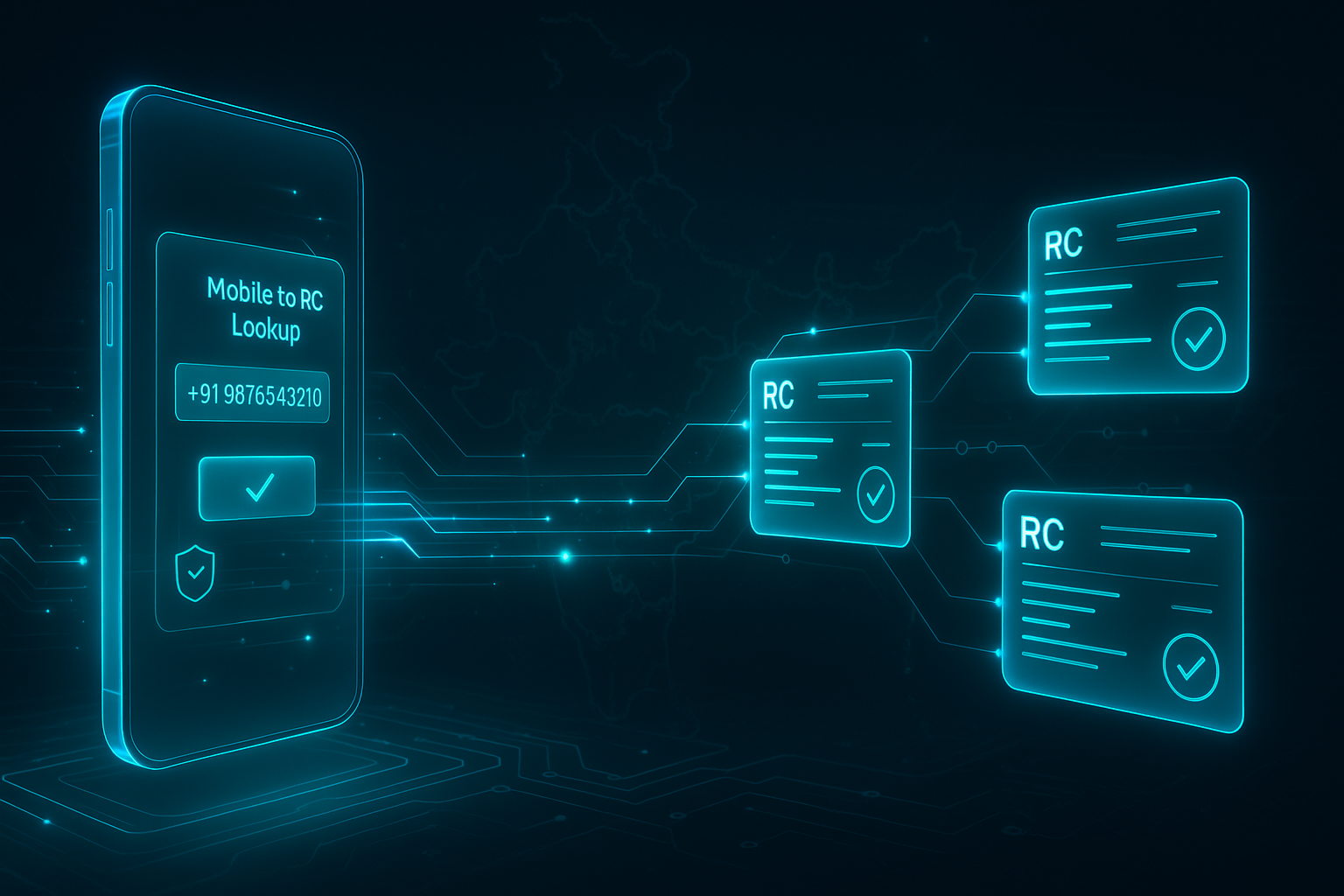
By linking a borrower’s mobile number to verified vehicle Registration Certificate (RC) data, NBFCs can validate vehicle details instantly and make smarter underwriting decisions.
Why Vehicle Verification Is Critical for NBFC Lending
In vehicle loans, the financed vehicle acts as collateral. If ownership details are incorrect or the vehicle is not properly registered, recovery becomes complex in case of default.
NBFCs must verify:
-
Whether the vehicle exists and is legally registered
-
Whether the borrower is genuinely linked to the vehicle
-
Whether the vehicle is eligible for financing
Manual verification methods often fail to provide this clarity at scale, especially during high loan demand periods.
Challenges with Traditional Vehicle Loan Verification
Most NBFCs still rely on RC uploads, manual data entry, and follow-up calls. These steps slow down approvals and introduce errors.
Common challenges include:
-
Incorrect or blurred RC uploads
-
Data entry mistakes
-
Fake or altered RC documents
-
Delays in verification during peak seasons
These issues impact customer experience and increase operational costs.
What Mobile to RC Verification Means for NBFCs
Mobile to RC verification allows NBFCs to retrieve vehicle registration details using a borrower’s mobile number. Instead of asking customers to manually enter RC numbers or upload documents, the system identifies vehicles linked to the mobile number from verified records.
This approach connects a trusted identifier—the mobile number—with official vehicle data, creating a stronger verification layer.
How Mobile to RC API Works
The Mobile to RC API processes a mobile number provided by the borrower. It checks verified vehicle databases to identify RC records associated with that number.
The API returns structured vehicle information such as:
-
Registration number
-
Vehicle class and type
-
Registration status
-
Fuel type and basic indicators
This data is delivered in real time and can be directly integrated into loan origination and underwriting systems.
Faster Vehicle Loan Approvals
Speed is a key differentiator in NBFC lending. Borrowers expect quick approvals, especially for two-wheeler and used vehicle loans.
Mobile to RC API reduces verification time from hours or days to seconds. Faster verification allows NBFCs to approve loans quickly without compromising risk checks, improving conversion rates and customer satisfaction.
Improving Ownership and Collateral Verification
Ownership verification is essential for secured lending. Mobile to RC verification helps NBFCs confirm that the borrower’s mobile number is linked to the vehicle being financed.
This strengthens collateral validation and reduces the risk of financing vehicles with disputed or unclear ownership.
Strengthening Fraud Detection and Risk Control
Vehicle loan fraud often involves fake RC documents, impersonation, or multiple loans taken on the same vehicle.
Mobile to RC API adds an additional fraud-prevention layer by validating mobile-to-vehicle relationships. Inconsistencies can be flagged instantly, allowing NBFCs to route such cases for deeper review before disbursement.
Supporting Digital and Field-Based Loan Journeys
NBFCs operate through digital platforms as well as field agents. Mobile to RC API works effectively in both models.
In digital journeys, borrowers can verify vehicle details instantly. In field operations, agents can validate vehicles on the spot using a mobile number, reducing paperwork and manual follow-ups.
Reducing Manual Effort and Operational Costs
Manual vehicle verification requires staff time, document storage, and repeated follow-ups. These activities increase cost per loan and limit scalability.
Mobile to RC API automates a large part of vehicle verification, allowing NBFCs to scale loan volumes without increasing verification teams.
Improving Data Consistency Across Lending Systems
Vehicle data flows across underwriting, risk management, loan servicing, and collections systems. Inconsistent data leads to reconciliation issues and reporting errors.
Mobile to RC verification provides standardized vehicle data across platforms, improving data quality and operational efficiency.
Supporting Compliance and Audit Readiness
Regulatory compliance requires NBFCs to maintain accurate and verifiable loan records. Ownership disputes or missing verification trails can create audit challenges.
Mobile to RC API helps ensure vehicle details stored in loan files are validated and traceable, improving audit readiness and reducing regulatory risk.
Use Cases Across Vehicle Loan Segments
In two-wheeler loans, borrowers often remember their mobile number but not RC details. Mobile to RC API bridges this gap and speeds up verification.
In used vehicle loans, the API helps confirm ownership before approval, reducing rework and recovery issues later.
In commercial vehicle loans, it supports faster onboarding of transport operators while maintaining strong risk controls.
Handling Edge Cases Effectively
Recent ownership transfers or mobile number changes may not reflect immediately in records. These cases should be treated as exceptions.
A hybrid workflow works best, where Mobile to RC verification is the default and manual checks are used only when necessary.
Future Role of Mobile to RC API in NBFC Lending
As NBFCs move toward fully digital lending models, automated verification will become standard. Mobile to RC API supports scalable, secure, and customer-friendly vehicle loan workflows.
Early adoption helps NBFCs improve efficiency while maintaining strong credit and fraud controls.
Conclusion
Mobile to RC API plays a crucial role in modern vehicle loan verification for NBFCs. It speeds up approvals, improves ownership and collateral verification, reduces fraud risk, and lowers operational costs.
For NBFCs focused on growth, accuracy, and digital lending efficiency, Mobile to RC API is not just a support tool. It is a foundational component of reliable and future-ready vehicle loan verification systems.

 English
 Arabic
 French
 Spanish
 Portuguese
 Deutsch
 Turkish
 Dutch
Dutch
 Russian
 Romaian
 Portuguese (Brazil)
 Greek
Greek