


Custom Metal Grinders: Precision Solutions for Industrial Performance
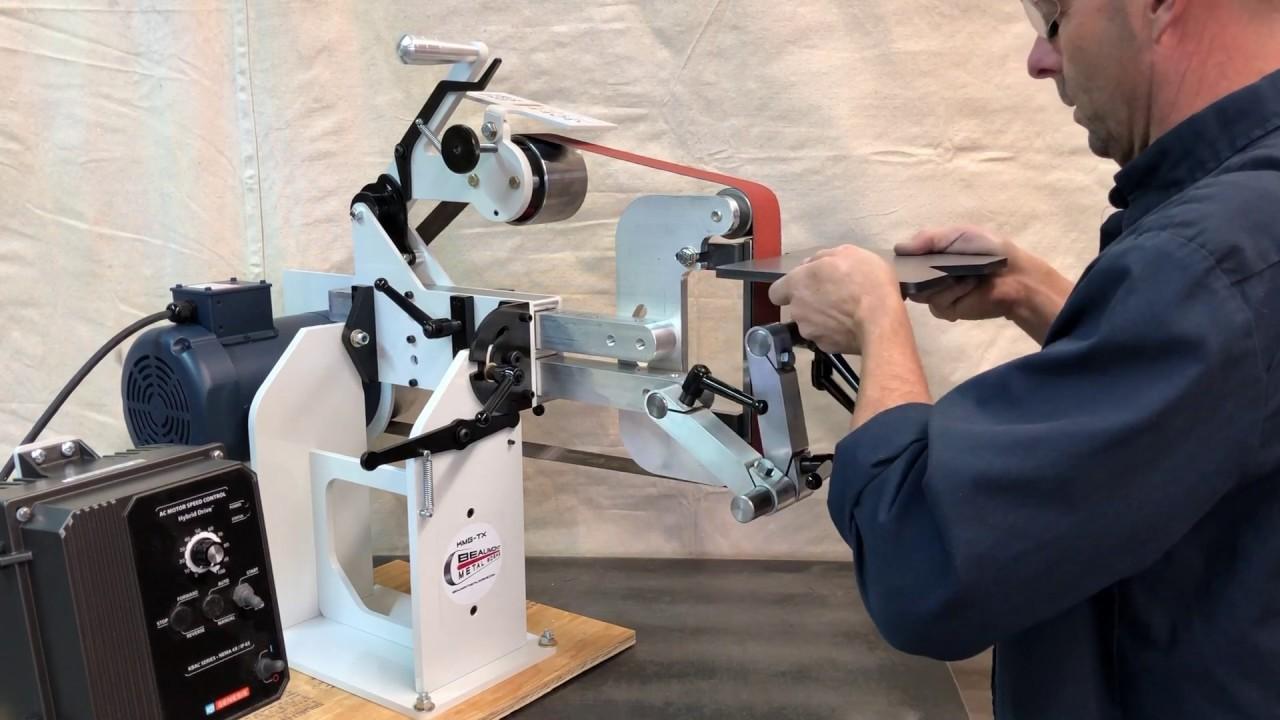
In modern manufacturing and industrial applications, efficiency and precision are more than mere buzzwords; they are business imperatives. Industries as diverse as aerospace, automotive, tooling, and heavy machinery rely on precision metalworking to achieve high-performance results.
At the heart of many critical metalworking operations lies one indispensable tool: the metal grinder. Yet as manufacturing challenges evolve, standard grinders alone no longer suffice. Enter custom metal grinders, engineered solutions designed to meet precise specifications, enhance operational outcomes, and deliver performance beyond what off-the-shelf systems can achieve.
What Are Custom Metal Grinders?
A custom metal grinder is a grinding machine that has been specially designed or modified to meet the unique requirements of a particular application, material, or production environment. Unlike standard grinders — which often come with fixed configurations and limited adjustability, custom grinders are tailored in terms of size, power, precision, and tooling to deliver optimal results for a given task.
These systems are not simply “one-size-fits-all” but are engineered through careful analysis of customer needs, material characteristics, and workflow requirements. Whether the task involves surface finishing, edge preparation, deburring, or contour grinding, custom grinders provide the right balance of power, accuracy, and adaptability.
Why Customization Matters in Grinding
Grinding is a fundamental process used to shape, finish, and refine metal parts. It can influence surface quality, dimensional accuracy, and component longevity. However, not all grinding needs are created equal:
Material Variability: Different metals — from soft aluminum to hardened tool steel — require distinct grinding approaches. A setup ideal for one material may be inadequate or damaging for another.
Part Geometry: Complex shapes, tight tolerances, or irregular surfaces demand specialized tooling and machine configurations to achieve the required finish.
Production Volume: High-volume operations have different needs compared to low-volume or prototype production. Custom machines can be optimized for speed, repeatability, and minimal downtime.
Surface Quality Standards: Industries such as aerospace or medical devices enforce strict surface finish specifications that off-the-shelf grinders may struggle to meet.
Customization ensures that each grinder aligns with these nuanced requirements, delivering consistent precision and improved productivity.
Core Components of Custom Metal Grinders
Custom metal grinders may vary widely depending on industry needs, but several components define their value and differentiate them from standard machines:
1. Specialized Grinding Wheels
The grinding wheel is the heart of the grinder. In custom systems, wheels are selected or designed based on:
Grit size and composition
Bond type (vitrified, resin, metal bond)
Shape and profile to match specific part geometries
Choosing the right wheel contributes directly to surface finish, material removal rate, and durability.
2. Engineered Drive Systems
Customized drive systems allow precise control over speed and torque. Variable frequency drives (VFDs), servo motors, and programmable controllers empower operators to tailor grinding parameters dynamically — crucial when dealing with sensitive or high-precision parts.
3. Advanced Fixturing and Workholding
Precision begins with secure and repeatable workholding. Custom grinders often include bespoke fixtures, chucks, and clamps designed to:
· Maintain alignment
· Reduce vibration
· Prevent workpiece movement
· Allow quick loading/unloading
This attention to fixturing helps eliminate errors and reduces cycle times.
4. Automation and Integration
Modern industrial requirements often demand integration with automated systems: robotic loading, conveyor interfaces, and smart sensors. Custom grinders can be built with automation in mind, leading to:
· Higher throughput
· Consistent quality
· Reduced labor costs
· Enhanced safety
Automation also facilitates data collection for monitoring performance metrics and feeding into predictive maintenance systems.
Benefits of Metal Grinders
Investing in a custom grinding solution delivers a wide range of operational advantages:
Enhanced Precision
When machines are engineered for a specific purpose, every parameter — from spindle alignment to wheel profile — is optimized. The result: tighter tolerances and consistent quality, often exceeding standards achievable with standard grinders.
Improved Surface Quality
Surface finish directly impacts how components perform in service. Custom grinders can produce finishes that reduce friction, improve fatigue resistance, and enhance aesthetic quality where required.
Reduced Setup and Cycle Times
With tailored tooling, fixtures, and parameter settings, custom grinders minimize the need for repeated adjustments and rework. This streamlines production and lowers per-part grinding time.
Greater Machine Longevity
Custom designs account for load distribution, vibration reduction, and thermal stability — all factors that reduce wear and tear. Not only do custom grinders perform better, they also last longer with lower maintenance overhead.
Flexibility for Future Needs
While built for specific tasks, many custom grinders are designed with modularity in mind. This means future upgrades, tooling swaps, or automation additions can be incorporated without extensive redesign.
Applications Across Industries
The impact of custom grinders spans multiple industries:
Aerospace
Aerospace components require ultra-precise surfaces and strict dimensional tolerances. Custom grinders are used for turbine blades, landing gear parts, and structural elements where material properties and performance requirements are stringent.
Automotive
High-volume manufacturing of engine components, transmission gears, and brake systems benefits from precision grinding. Custom machines help meet quality standards while maintaining throughput.
Tool and Die
Toolmakers rely on grinding for sharp edges, flat surfaces, and perfect fits. Custom grinders deliver consistent results on complex, high-precision tooling.
Medical Devices
Medical instruments and implants often require micro-level finishing on titanium and stainless steel. Custom grinders ensure these parts meet rigorous regulatory and performance standards.
Energy and Heavy Industry
Large, heavy components for turbines, generators, and industrial machinery demand grinders with higher power and bespoke workholding. Custom solutions deliver the muscle and precision needed for these applications.
Engineering Custom Solutions, The Process
Designing a custom grinder is a collaborative and iterative process:
Needs Assessment
Engineers start by understanding the customer’s production goals, part specifications, and material challenges.
Feasibility Analysis
Technical feasibility, cost considerations, and process mapping are evaluated to determine the optimal solution path.
Design and Simulation
CAD models, structural analysis, and virtual simulations ensure that the proposed solution meets requirements before fabrication.
Prototyping and Testing
A prototype machine may be built and tested under real conditions to refine performance and troubleshoot potential issues.
Implementation and Training
After installation, operators receive training tailored to the new system. Ongoing support ensures the grinder performs as expected.
Continuous Improvement
Feedback loops help refine settings and prioritize enhancements that further increase productivity or quality over time.
Challenges and Considerations
Despite their advantages, custom grinders require careful evaluation:
Upfront cost may be higher than a standard machine, though lifecycle value often compensates.
Design and delivery times can be longer due to engineering and fabrication cycles.
Change management is essential so operators adapt to new workflows and controls.
Successful implementation hinges on selecting a partner with deep engineering expertise and a clear understanding of grinding dynamics.
Future Trends in Custom Grinding Technology
As manufacturing evolves, so too will custom grinding:
Smart sensors and AI: Predictive maintenance and adaptive grinding based on real-time feedback.
Advanced abrasives: New materials that improve wheel life and grinding efficiency.
Increased automation: More integrated robotic and autonomous handling systems.
Sustainability: Grinding systems optimized to reduce energy use and material waste.
Conclusion
Custom metal grinders represent a convergence of engineering, precision manufacturing, and industrial performance. In an era where quality, speed, and reliability are paramount, these tailored solutions deliver measurable advantages, enabling manufacturers to push the boundaries of what’s possible.
Whether used for intricate aerospace parts or rugged industrial components, custom grinders are foundational tools that transform metalworking challenges into precision-driven solutions.

 English
 Arabic
 Spanish
 Portuguese
 Deutsch
 Turkish
 Dutch
Dutch
 Italiano
 Russian
 Romaian
 Portuguese (Brazil)
 Greek
Greek